FXEM - EMPIRE MARKETS - Company New Article
To access the website's classic version and the new accounts, please click here
Apr 22, 2026
Oil Prices Face Pressure After Inventory Build… Will the Recovery Continue?

A look at oil's movements following economic data releases
Oil prices showed mixed performance during today’s trading session following the release of U.S. crude oil inventories data, which came in against expectations, raising uncertainty about the market’s next direction.
Inventory Data Weighs on Oil
According to the latest data, U.S. crude inventories increased by 1.925 million barrels, while expectations had pointed to a decline of 1.900 million barrels, compared to a previous drop of 0.913 million barrels.
This unexpected build in inventories is considered a bearish signal, as it reflects either rising supply or weakening demand, putting downward pressure on oil prices in the short term.
Price Action Shows Market Resilience
Despite the negative data, oil prices have remained relatively stable, currently trading near the 88.00 – 90.00 range per barrel, supported by improving bullish momentum based on technical indicators.
This suggests that the market has not fully priced in the bearish data, as other supportive factors remain in play, including geopolitical tensions and supply concerns.
No long form. No registration. Just a quick rating and one sentence about your experience. Rate us on Trustpilot in under a minute.
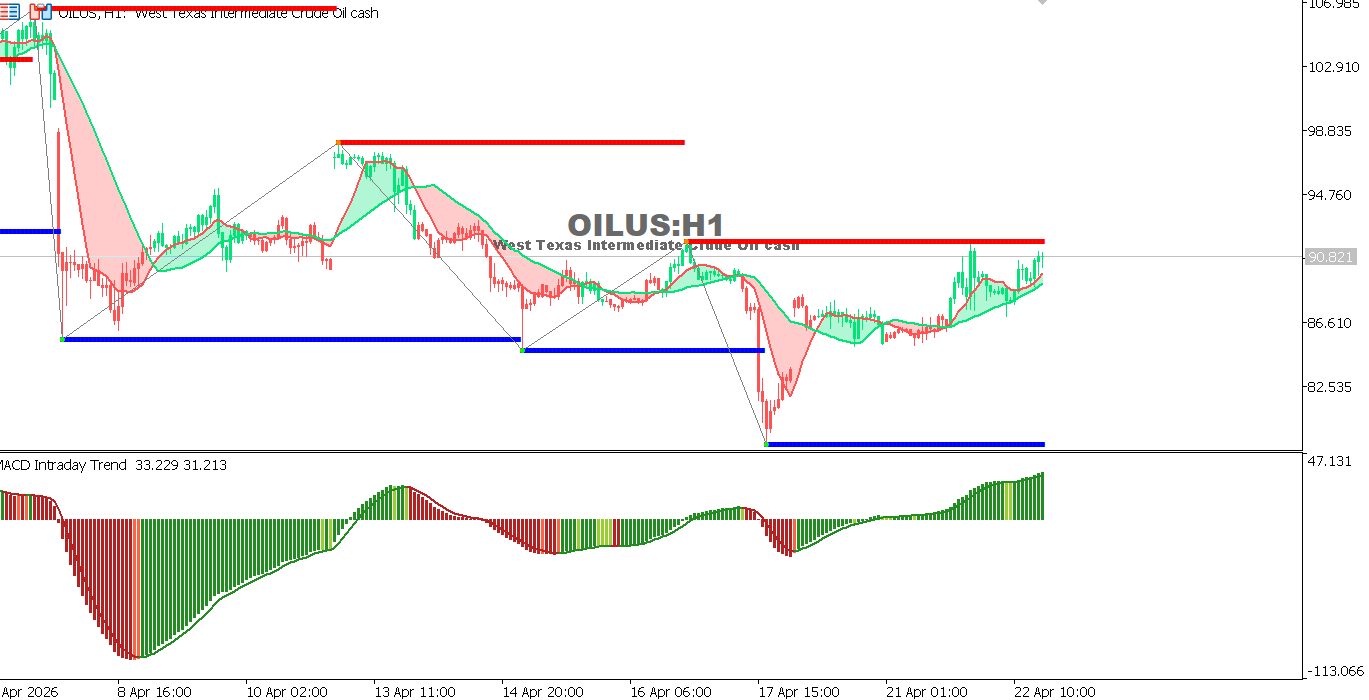
A look at the USOIL chart on H1 timeframe
From a technical perspective, oil is moving within a short-term bearish trend, while undergoing a bullish corrective phase supported by improving momentum.
- Trend: Bearish (bullish correction)
- Support: 86.50 – 82.50
- Resistance: 90.70 – 98.80
The MACD indicator is moving in positive territory, signaling a potential continuation of the recovery in the near term.
Expected Scenarios
Bullish Scenario:
A breakout above 90.70 may support further upside toward 92.50 and 95.00, with the possibility of extending gains if bullish momentum continues.
Bearish Scenario:
Failure to break resistance, followed by a drop below 86.50, could trigger further downside toward 84.00 and 82.50, especially if markets begin to price in the negative data more aggressively.
Conclusion
Oil price movements currently reflect a balance between bearish pressure from rising inventories and ongoing support from broader market factors, leaving the next move dependent on key technical levels.